
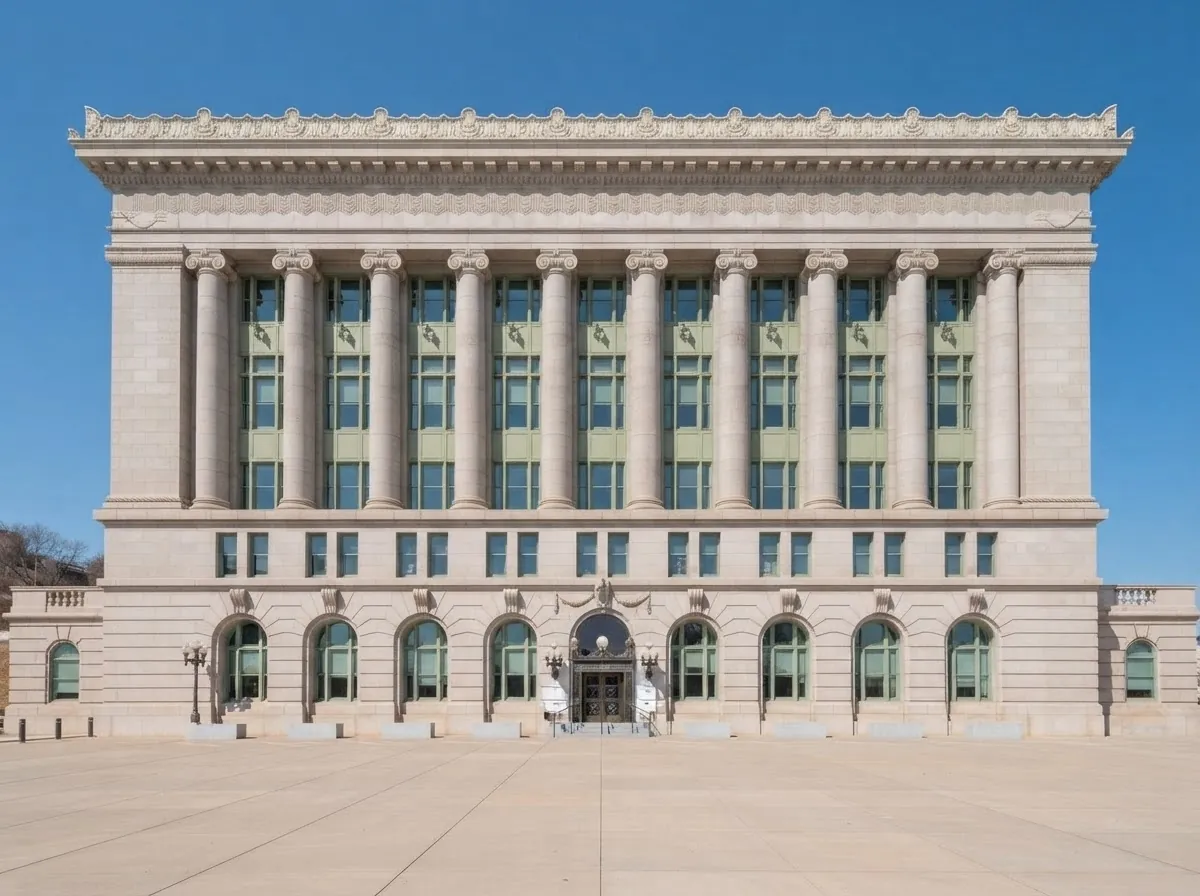
St. Louis County court records, Minnesota, are maintained by the district court clerk's office and are accessible through online tools, official court portals, and directly at the clerk's office. StLouisMNCourt.us allows you to quickly find publicly available information about court cases in this county. Additional sources include the Minnesota Court Records Online (MCRO) portal, the Duluth District Court page on the Minnesota Judicial Branch website, and the Courts/Law section on the county's official website.
St. Louis Court System Overview
St. Louis County is part of the Sixth Judicial District of Minnesota. This judicial district also includes Carlton, Cook, and Lake counties. The District Court is a court of general jurisdiction and hears all categories of cases—from criminal to family and probate. Due to the county's large area, the court operates in several locations: Duluth, Hibbing, and Virginia.
The main courthouse is located in Duluth:
The clerk's office hours are typically Monday — Friday, 8:00 AM–4:30 PM. Check the hours on the official court page as they may change on holidays.
Courts Serving St. Louis
Residents of the county are served by several courts of different jurisdictional levels.
State District Court
The court has three main locations:
Federal District Court
St. Louis County falls under the jurisdiction of the U.S. District Court, District of Minnesota. The nearest federal courthouse is:
Federal Bankruptcy Court
Bankruptcy cases are handled by the U.S. Bankruptcy Court, District of Minnesota, which also holds hearings in Duluth.
What Types of Cases St. Louis Courts Hear
The St. Louis District Court hears virtually all categories of cases provided for by Minnesota law:
- Criminal cases: felonies, misdemeanors, petty misdemeanors
- Civil cases: claims of any amount, including small claims (conciliation court / small claims)
- Family law: divorce, custody, child support, protective orders
- Probate cases: estate administration, guardianship, conservatorship
- Juvenile cases: delinquency, child protection, adoption
- Traffic violations and DUI/DWI
District Court Cases in St. Louis
In Minnesota, the district court is the sole court of general jurisdiction at the first instance. There is no separate magistrate court as an independent entity here; instead, some judges perform functions similar to magistrates within the district court.
Serious criminal cases (felonies) begin with the first appearance and preliminary hearing, after which a district court judge handles the case through sentencing. Civil claims for large sums, appeals from conciliation court, and post-judgment proceedings are also heard by district court judges. Cases are assigned to judges according to the internal rules of the Sixth Judicial District.
Magistrate Court Cases in St. Louis
In Minnesota, there is no separate magistrate court. Misdemeanors, petty misdemeanors, traffic violations, and DWI cases are heard by the district court. For small civil disputes, there is a conciliation court (similar to small claims court).
The jurisdictional limit for conciliation court in Minnesota is $15,000. These cases are heard in a simplified procedure, usually without attorneys. Claims can be filed at the court clerk's office in Duluth, Hibbing, or Virginia. Decisions of the conciliation court can be appealed to the district court by filing a demand for removal within 20 days.
Family Law, Probate, and Juvenile Matters in St. Louis
Family Law
Divorce, paternity establishment, child custody, child support, and Orders for Protection are handled by district court judges. Certified copies of divorce decrees can be obtained from the court clerk's office where the decision was made, as noted by the Minnesota State Law Library.
Probate Cases
Probate proceedings include estate administration, appointment of guardians and conservators, and trust matters. These cases are handled by the district court; records are generally public, except for certain medical or financial documents, access to which may be restricted by the court.
Juvenile Cases
Juvenile delinquency and child protection cases are handled separately. Juvenile case records are confidential under Minnesota law. For information, contact the juvenile court services department at the district court.
How Cases Move Through the St. Louis Court System
- Case Initiation: a criminal complaint is filed by the prosecutor; a civil complaint or petition is filed by the plaintiff through the court clerk's office.
- Judge Assignment: the case is assigned to a judge according to the internal procedures of the Sixth Judicial District.
- First Appearance: in criminal cases — arraignment; in civil cases — scheduling conference.
- Pretrial Phase: motions, discovery, plea negotiations in criminal cases.
- Trial Phase: trial, plea, settlement, or default judgment.
- Post-Trial Phase: sentencing, appeal to the Minnesota Court of Appeals, or enforcement of the judgment.
Court Administration, Local Rules, and Public Access in St. Louis
Court administration in the Sixth Judicial District is managed by the district's administrative judge and the trial court administrator. For information on hearing dates, local rules, and procedures, refer to the Courts/Law section on the county's website or directly contact the court clerk's office.
Access to court records is governed by the Rules of Public Access to Records of the Judicial Branch of Minnesota. Most court records are public, but some categories are restricted:
- Juvenile cases — confidential
- Mental health and chemical dependency records — restricted access
- Sealed or expunged records are not available to the public
The Duluth courthouse has a public access computer for court records and a self-help center. Hearings can be attended in person; for some types of hearings, the court may allow remote participation — confirm this with the clerk's office.
Court Records and Related Court Resources in St. Louis
- Online Case Search: Minnesota Court Records Online (MCRO) allows searching cases from all district courts in the state by party name or case number. Information includes case details, hearings, and monetary judgments.
- Court Case Documents: The Minnesota State Law Library explains how to obtain copies of district court case documents, including party statements and court decisions.
- Birth, Death, Marriage Certificates: The St. Louis County Public Records department issues birth, death certificates, marriage licenses, and processes genealogical requests.
- Real Estate Recording: The Recorder & Registrar of Titles office handles real estate document recording and issues land title certificates.
- Jail Roster: The Sheriff's office Jail Roster publishes the current list of individuals held in the county jail.
- Active Warrants: The Warrant Division provides an online list of active warrants based on Sixth Judicial District data.
- Public Offender Records: The Public Offender Records page contains links to MN criminal history, sex offender registry, and DOC database.
- State Inmate and Fugitive Search: The Department of Corrections allows searching for individuals under DOC supervision and non-compliant predatory offenders.
- Public Data Requests: The Sheriff's Records Division processes requests for crime reports, arrest records, and traffic accident reports.
- Tax and Property Information: The Property Details Search is updated daily and allows searching by parcel number or address.